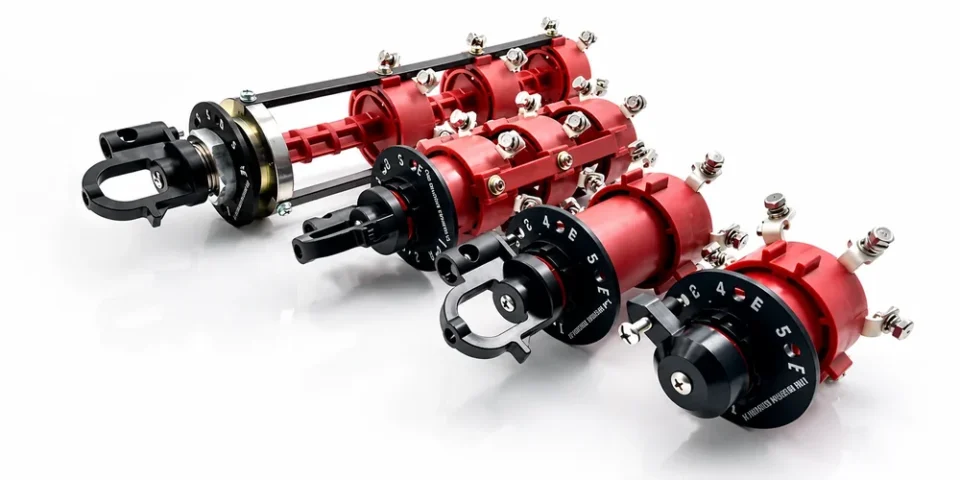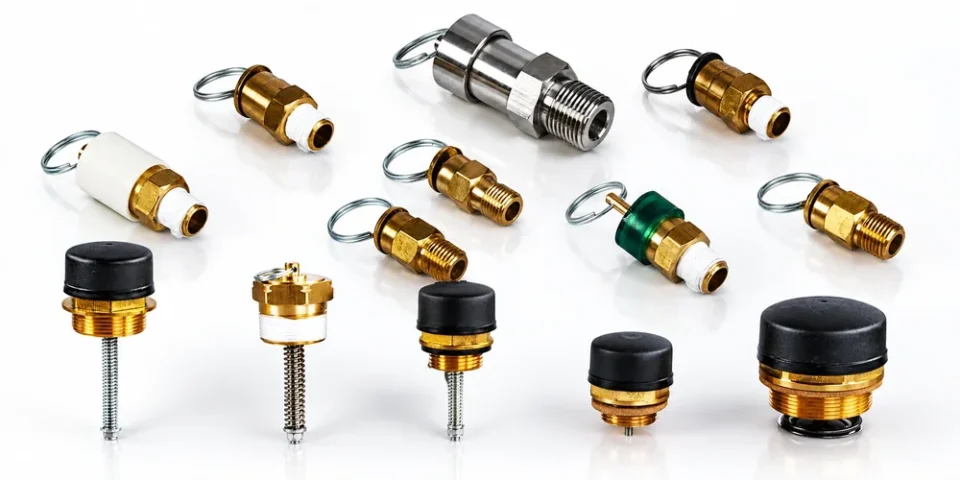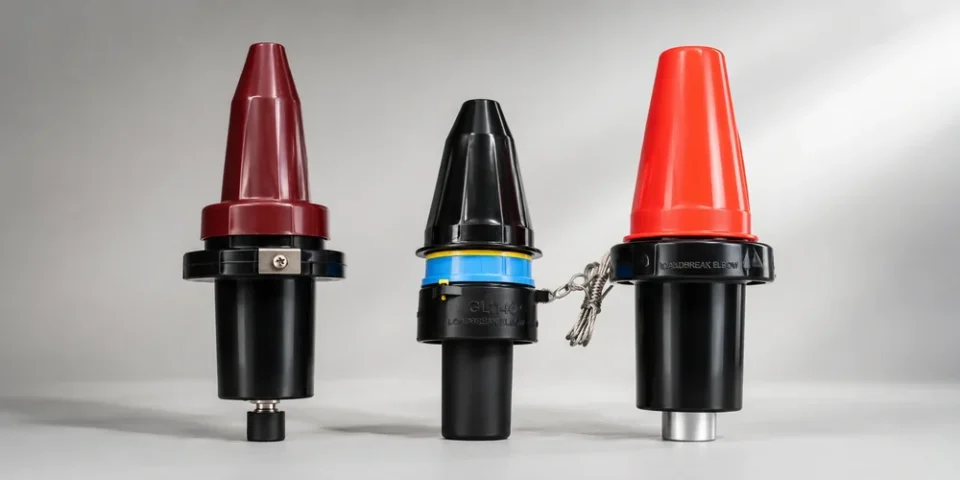
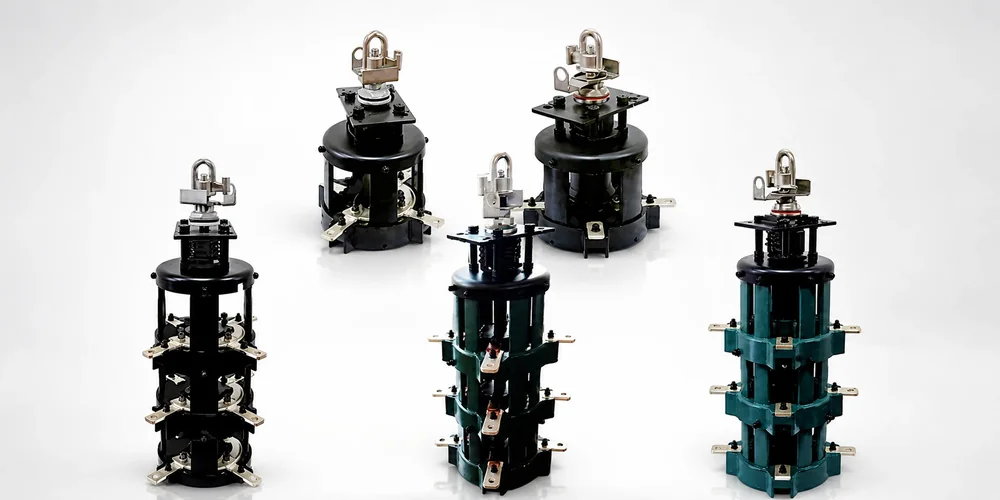
An oil-immersed load switch (often abbreviated LBS) is a medium-voltage switching device that is mounted inside the transformer tank, immersed in the same dielectric oil as the windings. It is the standard switching solution for pad-mount distribution transformers in 25 kV and 35 kV classes, and it eliminates the need for an external load-break switch on the primary side. This article explains how oil-immersed load switches work, where they fit in a distribution network, and how to specify one correctly.
Quick Answer
An oil-immersed load switch provides defined load-current switching inside liquid-filled equipment; it is not a substitute for a circuit breaker unless specifically designed and rated for fault interruption. Select it by voltage, current, switching duty, short-time withstand, circuit configuration, operating sequence, liquid compatibility, interlocks, and the applicable equipment standard.
What an Oil-Immersed Load Switch Actually Does
An oil-immersed load switch is not a breaker. It cannot interrupt fault current — that is the job of the upstream protective device (fuse or breaker). What it can do is:
- Make and break load current at the transformer’s full nameplate rating.
- Isolate the transformer from the primary feeder for maintenance.
- Sectionalize a feeder by switching between two primary sources (in a four-position or “T-blade” design).
- Provide visible isolation through an external operating handle that mechanically drives the internal switch.
The switch contacts operate in oil, which provides both dielectric strength between contacts at the open position and arc-quenching when the contacts separate under load. The arc energy vaporizes a small amount of oil, the gas bubble rises and displaces ionized gas, and the arc extinguishes within one or two cycles of the 50/60 Hz wave.
Two-Position vs Four-Position Designs
Two switch geometries are standard for pad-mount distribution transformers:
| Geometry | Positions | Use |
|---|---|---|
| Two-position (ON / OFF) | 2 | Single-source feeder; transformer is either connected or isolated |
| Four-position (T-blade or V-blade) | 4 | Two-source feeder (main / alternate / open / ground) |
The two-position switch is the lowest-cost option. The four-position switch allows the operator to transfer the load between two primary sources without operating any upstream device — a feature that is valuable on urban loops where reliability is measured by momentary outage duration rather than by annual outage count.
Ratings and Specs
A typical 25 kV class oil-immersed load switch has these ratings:
| Parameter | Typical rating |
|---|---|
| Maximum voltage | 27 kV (15 kV class), 38 kV (25 kV class), 42 kV (35 kV class) |
| BIL | 95 kV (15 kV class), 125 kV (25 kV class), 150 kV (35 kV class) |
| Continuous current | 200 A, 400 A, 630 A |
| Load break current | Same as continuous |
| Making current (momentary) | 10 kA peak |
| Short-time withstand (1 s) | 10 kA rms |
| Operations at rated load | 1000 mechanical / 100 electrical |
| Operating mechanism | External handle, padlockable in either position |
The 630 A continuous rating is the most common for 25 kV class transformers. A 25 kV 630 A two-position oil-immersed load switch is the standard component for any pad-mount above 500 kVA.
Where Oil-Immersed Load Switches Are Used
| Application | Use frequency |
|---|---|
| Pad-mount distribution transformer, 500–2500 kVA | Standard |
| Pad-mount distribution transformer, 2500–5000 kVA | Optional; often replaced by external switch |
| Substation transformer | Optional; usually replaced by circuit breaker |
| Network transformer | Standard, with network protector |
| Pole-top transformer | Rare; usually no internal switch |
For pad-mount transformers in the 500–2500 kVA range, the internal load switch is essentially universal in North American utility practice. Above 2500 kVA, an external SF6 or vacuum circuit breaker is often preferred because the continuous current rating becomes too high for an internal switch.
Mechanism and Operation
The switch mechanism is mechanical, typically spring-loaded, with a direct drive from an external handle through a sealed bushing on the transformer cover. The external handle is usually:
- Padlockable in either position (Open or Closed) so the operator can apply lockout-tagout
- Position-indicating with a clear OPEN / CLOSED flag visible at the base of the handle
- Operable with a hot-stick from outside the lockout zone
The internal mechanism operates in oil, so there is no exposed energized part inside the tank when the cover is removed for inspection. The switch contacts are typically silver-plated copper, with stainless steel or beryllium copper springs to maintain contact pressure over the life of the switch.
Maintenance
An oil-immersed load switch is a low-maintenance device, but it is not zero-maintenance. Recommended maintenance intervals:
| Maintenance task | Interval |
|---|---|
| External visual inspection of operating handle | 6 months |
| Mechanical operation check (no load) | 1 year |
| Oil sample analysis (DGA, dielectric breakdown) | 1 year (first 3 years), then 3 years |
| Contact resistance measurement | 5 years |
| Internal inspection (cover removal) | 10 years or 1000 operations |
| Contact replacement (if wear indicator triggered) | As needed |
The most common failure mode is contact wear after many operations. Most designs include a wear indicator that protrudes from the contact when the silver plating has eroded below the minimum thickness. The operator can read the wear indicator with the transformer de-energized and grounded.
Specifying a Switch
When specifying an oil-immersed load switch for a transformer, the procurement document should include:
- Maximum system voltage (e.g., 27 kV for 25 kV class)
- BIL (e.g., 125 kV)
- Continuous current (e.g., 630 A)
- Number of positions (2 or 4)
- Operating mechanism (external handle, padlockable, position indicator)
- Short-time withstand (e.g., 10 kA rms / 1 s)
- Number of operations at rated load (typically 100 electrical, 1000 mechanical)
- Compatibility with the transformer cover mounting pattern
- Oil compatibility (mineral oil, ester fluid, silicone)
- Standards compliance (IEEE C37.20.7, IEC 62271-103, or both)
Comparison with External Switches
| Parameter | Internal oil-immersed LBS | External SF6 / vacuum breaker |
|---|---|---|
| Cost | Lower (no separate enclosure) | Higher |
| Footprint | Inside transformer tank | Separate bay, larger site |
| Visual isolation | Through oil sight glass or external handle | Direct viewing window |
| Operation under load | Yes | Yes |
| Fault interruption | No (requires upstream fuse) | Yes (independent breaker) |
| Maintenance | Defer to transformer overhaul | Separate scheduled maintenance |
| Best for | 500–2500 kVA pad-mount | Substation, large transformer |
For pad-mount transformers in the 500–2500 kVA range, the internal oil-immersed load switch is the lowest-cost, most-reliable option. For larger substations, an external circuit breaker provides independent fault interruption and easier field maintenance.
Frequently Asked Questions
Can an oil-immersed load switch interrupt a short circuit?
A conventional load switch is intended for specified load-current duties, not general fault-current interruption. Protection must be coordinated with fuses, breakers, or a device specifically rated for the required fault duty.
When is a four-position switch useful?
It is commonly used in loop-fed systems where the operator needs defined source-selection, sectionalizing, or open positions. The permitted sequence depends on the switch design and one-line diagram.
What must be confirmed before ordering?
Provide the one-line diagram, voltage and current, switching duty, short-time withstand, number and sequence of positions, operating-handle arrangement, liquid type, tank mounting, interlocks, and applicable standard.
Conclusion
An oil-immersed load switch inside a pad-mount distribution transformer is the standard switching solution for North American 500–2500 kVA transformers. It provides load-break capability, visible isolation, and padlockable operation at a lower cost than an external breaker bay. The two-position design is universal for single-source feeders; the four-position “T-blade” or “V-blade” design adds source-transfer capability for loop-fed urban networks.
Starlight Electric supplies 25 kV 630 A two-position oil-immersed load switches for pad-mount transformers up to 2500 kVA, including the external operating handle, mounting hardware, and pre-wired position indicator. Each switch is factory-tested to IEEE C37.20.7 and ships with a contact-resistance and dielectric test report.
Browse the load switch family at st-trafo.com, or send your transformer rating and switching practice to the engineering team for a written switch specification.
Related Reading
- Transformer Tap Changer Basics: How Rotary Tap Changers Work
- Transformer Pressure Relief Devices: Safety Requirements and Selection
—
Specifying an oil-immersed load switch for a non-standard transformer rating or a special switching sequence? Send your system diagram and operational requirements to Starlight for a written switch recommendation including mechanical interface dimensions.
Browse Related Products
The following Starlight Electric components are referenced throughout this guide and available with full factory test reports: