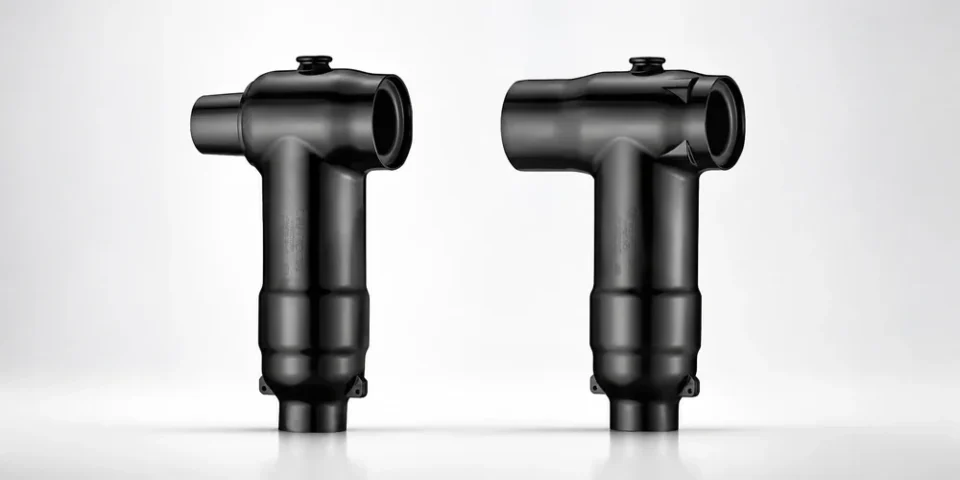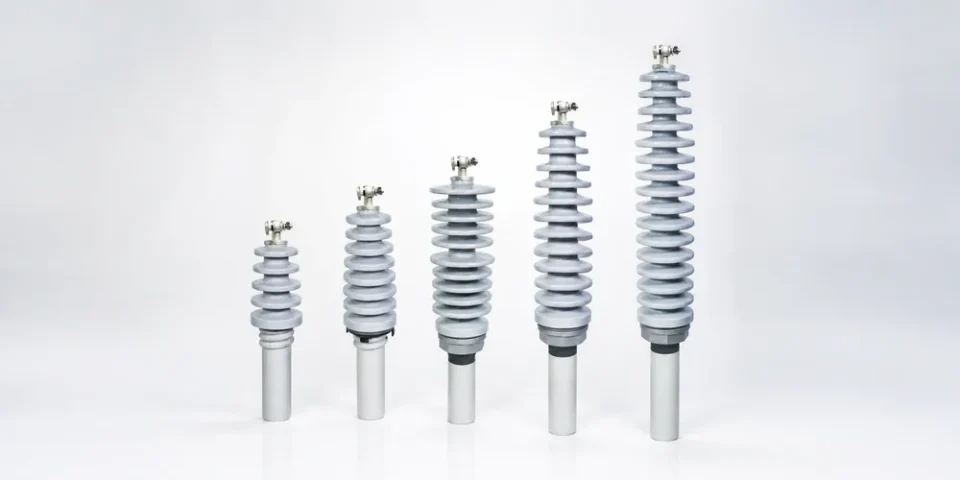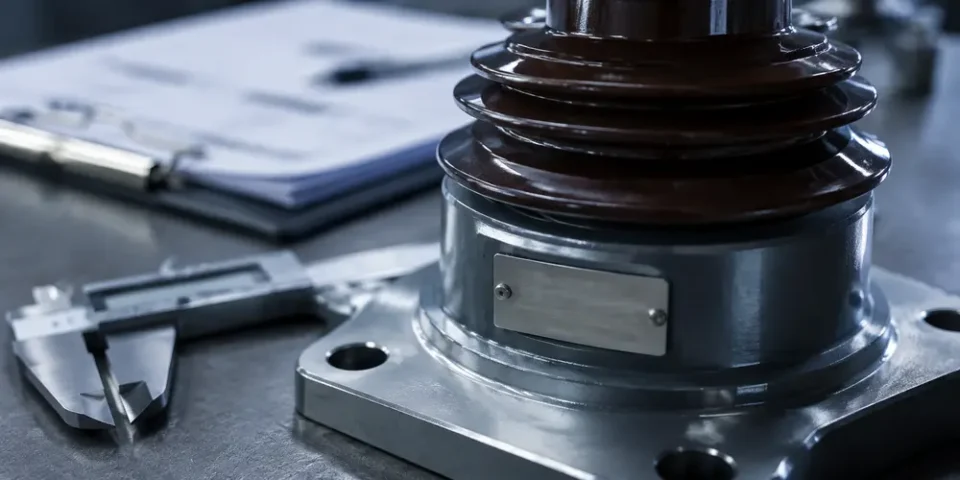
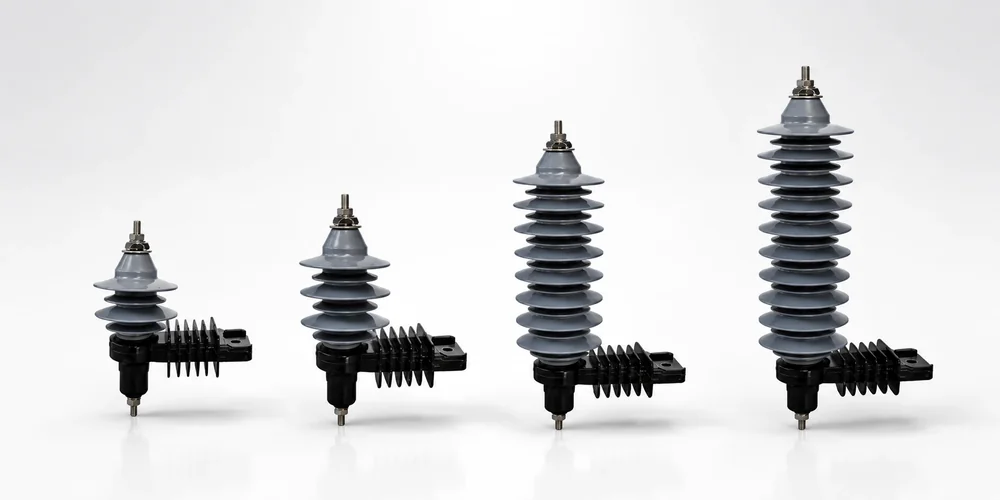
A surge arrester has two principal components: the ZnO varistor block stack (which actually does the protection work) and the external housing (which supports the stack mechanically and provides the outdoor weather envelope). Since the 1980s, the industry has shifted progressively from porcelain housings to polymer (silicone-rubber) housings, but porcelain is still specified in many transmission substations and is preferred in some climates. This article compares the two housing technologies across the criteria that matter most to a procurement or specification engineer: weight, pollution performance, fragmentation risk, life expectancy, and total cost.
Quick Answer
Housing material does not determine the arrester’s protective level by itself. Polymer housings are lighter and generally reduce fragmentation hazards, while porcelain offers long service experience and high rigidity. Selection should follow the arrester standard, system voltage, duty cycle, pollution level, mechanical loading, seismic conditions, and utility practice.
Why the Housing Matters at All
The varistor blocks in both technologies are essentially the same — ZnO powder sintered into dense ceramic discs with metalization on the faces. The blocks degrade slightly with every energy pulse they absorb, and they are sensitive to moisture ingress and surface contamination. The housing determines how well the stack is sealed from the environment, how it sheds water and pollution, and what happens if it fails.
The housing does not affect the arrester’s clamping voltage or discharge capacity in any meaningful way. Those are set by the varistor block geometry and the column length. The housing determines the survivability of the arrester in the field.
Mechanical Comparison
| Parameter | Porcelain | Polymer (silicone rubber) |
|---|---|---|
| Density | ~2.4 g/cm³ | ~1.1–1.3 g/cm³ |
| Weight for 36 kV class | 35–45 kg | 8–12 kg |
| Fragility on impact | Brittle, shatters | Flexible, no shatter |
| Handling on site | Two-person lift, padding required | Single-person carry |
| Mounting hardware | Cast-iron flange, hot-dip galvanized | Aluminum or composite flange |
| Surface finish | Glazed, hydrophobicity requires coating | Inherently hydrophobic, sheds water |
The weight difference is dramatic and matters on two practical levels. First, the shipping cost of a 36 kV polymer arrester is roughly half that of the porcelain equivalent for the same voltage class. Second, the installation labor is much lower — a single technician can mount a polymer arrester on a pole-top distribution transformer, whereas porcelain arresters of the same class typically need a two-person crew and a lifting strap.
Pollution and Outdoor Performance
The two housing technologies behave very differently in polluted outdoor environments:
| Polluted condition | Porcelain | Polymer |
|---|---|---|
| Coastal salt fog | Requires silicone grease or extra creepage | Performs well, hydrophobic surface |
| Industrial pollution | Needs regular washing and creepage extension | Self-cleaning under rain |
| Desert dust | Flashover risk after dry period | Lower risk due to hydrophobic transfer |
| Heavy rain | Performance OK | Performance OK |
| Ice and snow | Ice bridging risk | Ice bridging risk, but lower shed adhesion |
In coastal and heavy-industrial environments, polymer arresters have largely displaced porcelain. The hydrophobic surface of silicone rubber causes water to bead up rather than form a continuous conductive film. This is the so-called hydrophobicity transfer effect: even after years of service, silicone rubber sheds contamination rather than allowing it to adhere.
For indoor substations or clean industrial environments, porcelain is still acceptable and may be specified for its longer service life and higher short-time mechanical strength.
Failure Mode: Fragmentation
The most important difference between the two housing technologies is what happens at end-of-life.
A failed porcelain arrester typically fractures catastrophically. The varistor stack overheats, the internal gas pressure rises, and the porcelain housing explodes outward. In populated areas, this fragmentation can travel tens of meters and has caused injuries.
A failed polymer arrester typically does not fragment. The silicone rubber housing softens and tears, the varistor column is exposed, and the arrester conducts to ground in a controlled manner. Some polymer designs include an internal fault indicator (a colored band or ejectable pin) that signals failure without an external rupture.
For distribution transformers mounted in residential areas, near walkways, or on pole-tops above pedestrian zones, polymer arresters are now the de-facto standard because of the fragmentation risk. Many utilities have written policies that exclude porcelain-housed arresters from equipment installed in publicly accessible areas.
Electrical Performance Over Service Life
| Service parameter | Porcelain | Polymer |
|---|---|---|
| Design service life | 30+ years typical | 25–30 years typical |
| Sensitivity to UV | None (glaze is UV-stable) | Requires carbon-black or UV stabilizer |
| Sealing against moisture | Gasket + cement, can age | Heat-cured silicone, very stable |
| Partial discharge performance | Excellent at new, sensitive to seal degradation | Stable, less sensitive to age |
| Reference voltage drift | Slow upward drift typical | Similar upward drift |
The electrical performance is roughly comparable. The porcelain arrester has a slight edge in long-term stability, but the polymer arrester is easier to inspect in the field because a polymer housing that has lost hydrophobicity can be visually identified, whereas a glazed porcelain surface gives no early warning of seal aging.
Cost Comparison
For the same voltage class and discharge current rating:
| Cost element | Porcelain | Polymer |
|---|---|---|
| Unit price (36 kV class) | 100 % (reference) | 85–95 % |
| Shipping | 100 % (heavy) | 50–60 % |
| Installation labor | 100 % (two-person) | 50–60 % (one-person) |
| Total installed cost | 100 % | 70–85 % |
The polymer arrester is typically 15–30 % cheaper in total installed cost for distribution-class arresters below 110 kV. For 110 kV and above, the cost gap narrows because the porcelain flange and pedestal hardware are similar in both designs.
Selection Guidance by Application
| Application | Recommended housing |
|---|---|
| Pole-top 15–35 kV distribution | Polymer |
| Pad-mount transformer 15–35 kV | Polymer |
| Coastal substation 35–110 kV | Polymer |
| Heavy industrial area 35 kV | Polymer |
| Indoor metal-clad switchgear 5–35 kV | Porcelain or polymer, interchangeable |
| Transmission substation 110–550 kV | Porcelain still preferred in many utilities |
| Desert / high-UV | Polymer with verified UV protection |
| Arctic / extreme cold | Either, but verify low-temperature impact rating |
For a 110 kV transmission station in a clean environment with established porcelain inventory, porcelain remains a defensible choice. For everything else, polymer is the modern default.
Frequently Asked Questions
Does a polymer housing provide better electrical protection?
Not automatically. Protective performance depends primarily on the complete arrester design, including MCOV, rated voltage, residual voltage, energy capability, pressure-relief behavior, sealing, and qualification tests.
Which housing is preferable in public areas?
Polymer is often preferred where low weight and reduced brittle-fragment risk matter, but the utility specification and product qualification remain decisive.
What site data are needed for selection?
Specify system grounding, maximum continuous operating voltage, temporary overvoltage duty, altitude, contamination severity, mechanical and seismic loads, and the required IEC or IEEE test standard.
Conclusion
The choice between polymer and porcelain surge-arrester housings is no longer a technical debate — it is mostly a procurement and risk-management decision. Polymer wins on weight, fragmentation safety, pollution performance, and total installed cost. Porcelain still wins on long service life in clean environments and on some transmission voltage classes.
For 35 kV distribution-class arresters mounted on or near transformers, polymer is the appropriate choice in 2026 and beyond.
Browse the Starlight Electric range of polymer-housed distribution arresters from 35 kV up to 110 kV, or contact the engineering team for a housing recommendation specific to your installation environment.
Related Reading
- Transformer Pressure Relief Devices: Safety Requirements and Selection
- ANSI vs IEC Standards for Transformer Bushings: What International Buyers Need to Know
—
Specifying a surge arrester for a non-standard environment — coastal, desert, heavy industrial, or high altitude? Send your site conditions and system voltage to the Starlight engineering team for a written housing recommendation.
Browse Related Products
The following Starlight Electric components are referenced throughout this guide and available with full factory test reports: