Transformer bushings are specified through different standards frameworks. North American projects commonly cite the IEEE C57.19 series, while international projects commonly cite IEC 60137. Both frameworks address ratings and tests, but their terminology, preferred rating values, dimensional practices, and documentation are not automatically interchangeable.
Quick Answer
Do not convert an IEEE bushing specification into an IEC specification by matching nominal voltage alone. State the exact standard and edition, highest system voltage, insulation level, continuous current, frequency, mounting and terminal dimensions, service conditions, and required test evidence. Describe a design as dual-compliant only when the supplier documents compliance with both cited standards.
What the Standards Cover
IEEE C57.19.00 provides general requirements, service conditions, ratings, and test procedures for power apparatus bushings. Other documents in the C57.19 series provide product-specific performance characteristics or application guidance.
IEC 60137 specifies characteristics and tests for insulated bushings used in transformers, reactors, switchgear, and other AC equipment with highest voltage for equipment above 1,000 V. The applicable scope and test program depend on the bushing type and rating.
The standards do not replace the transformer drawing. A compliant bushing can still be unsuitable if its flange, oil-end length, conductor, terminal, sealing arrangement, or clearances do not fit the equipment.
Rating Language: Nominal Class vs Highest Voltage for Equipment
North American specifications often begin with a nominal voltage class and BIL. IEC specifications commonly emphasize Um, the highest voltage for equipment, together with standardized insulation levels.
These values may look close without being equivalent. For example, an ANSI/IEEE “15 kV class” description should not be translated into an IEC line item until the system voltage, grounding, Um, and required lightning-impulse and power-frequency withstand levels are confirmed.
Use this sequence:
- Identify nominal system voltage and maximum operating voltage.
- Confirm system grounding and insulation coordination.
- State the required lightning-impulse and power-frequency withstand levels.
- Apply the terminology and preferred ratings of the governing standard.
Electrical Tests and Acceptance Criteria
Both frameworks address dielectric withstand, current-carrying performance, partial discharge where applicable, and mechanical or sealing requirements. The exact test voltage, sequence, applicability, and acceptance criteria depend on the standard edition, voltage level, insulation technology, and bushing design.
A procurement specification should distinguish:
- Routine tests: performed on each manufactured unit as required by the standard and purchase specification.
- Type tests: demonstrate that a representative design meets defined performance requirements.
- Special tests: additional tests agreed between purchaser and supplier for a project or design.
Do not accept a generic statement such as “IEC tested” without the standard number, edition, offered type designation, test category, and report traceability.
Dimensions and Interchangeability
The most common sourcing error is assuming that similar electrical ratings create a drop-in replacement. Verify at least:
- Mounting-flange geometry and bolt circle
- Tank opening and sealing surfaces
- Oil-end length and internal clearances
- Air-end length and phase-to-phase clearance
- Conductor diameter and current path
- Top-terminal thread, stud, palm, or NEMA pad pattern
- Gasket material and compression requirements
- Test tap or potential tap, if present
- Current-transformer accommodation, if present
- Mass, center of gravity, and lifting provisions
Require a dimensioned approval drawing before manufacturing or replacement.
Service Conditions
Standard ratings assume defined normal service conditions. State deviations explicitly, including:
- Ambient and transformer-top-oil temperature
- Altitude above the standard reference condition
- Solar radiation and enclosure effects
- Coastal, industrial, desert, or icing environment
- Seismic and mechanical terminal loads
- Installation angle and indoor or outdoor use
- Fire-safety or environmental requirements for insulation technology
Pollution performance should be based on the site assessment and insulator design, not on a simple “coastal” label. Creepage distance is only one part of contamination performance.
Nameplate and Documentation
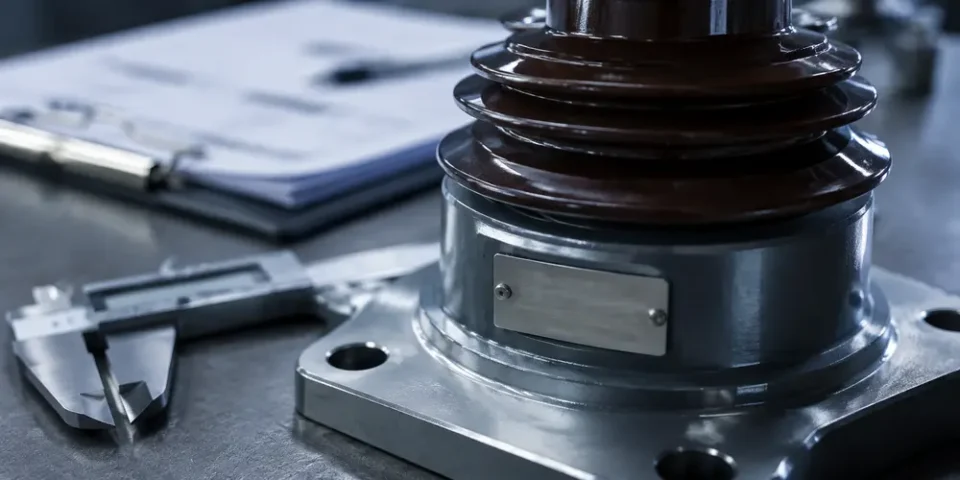
Nameplate conventions differ by design and standard. The purchase order should define the required markings and documentation, which may include:
- Manufacturer, type, serial number, and year
- Rated voltage or Um and insulation level
- Rated current and frequency
- Standard number and edition
- Capacitance and dielectric-loss reference values for graded bushings
- Terminal or test-tap information
- Mass and oil quantity where applicable
- Routine-test report and approved drawing
- Type-test evidence required by the project
Marking both an IEEE and IEC reference on a nameplate is meaningful only when the underlying design and documentation demonstrate both requirements.
Practical Procurement Matrix
| Project situation | Recommended specification approach |
|---|---|
| North American utility replacement | Cite the owner’s IEEE-based specification, exact dimensions, and existing transformer drawing |
| IEC-market new transformer | Cite IEC 60137, Um, insulation level, service conditions, and transformer interfaces |
| Global product platform | Create a requirement matrix showing every IEEE and IEC clause or test that applies |
| Legacy bushing with incomplete records | Use nameplate data, field measurements, transformer drawings, and manufacturer confirmation |
| High-altitude or polluted site | Add the site-specific dielectric, external insulation, and environmental requirements |
Procurement Checklist
Before requesting a quotation, send:
- Governing standard and edition
- Transformer type, voltage, kVA/MVA, and winding connection
- System maximum voltage, grounding, and insulation level
- Rated current, overload duty, and frequency
- Indoor/outdoor service, altitude, ambient, and pollution data
- Existing bushing nameplate and dimensioned drawing
- Terminal, flange, oil-end, and sealing requirements
- Required routine, type, and special test reports
- Marking, language, packaging, and traceability requirements
Frequently Asked Questions
Are ANSI and IEEE the same for bushing procurement?
North American specifications are often described as ANSI/IEEE, but the purchase order should cite the exact IEEE standard, edition, and owner requirements rather than relying on the broad label “ANSI.”
Is an IEC 60137 bushing automatically interchangeable with an IEEE bushing?
No. Electrical ratings can appear similar while dimensions, preferred rating values, test requirements, marking, and service-condition assumptions differ.
Does a dual-marked nameplate prove dual compliance?
Not by itself. Request an explicit compliance statement, routine-test report, applicable type-test evidence, and drawings tied to the offered design.
Which standard should an international tender use?
Use the asset owner’s required standard. If both frameworks are required, define each requirement and deliverable in a compliance matrix instead of using a vague phrase such as “ANSI/IEC equivalent.”
Conclusion
IEEE and IEC bushing standards pursue similar safety and performance goals but organize ratings, tests, and documentation differently. The safest international specification identifies the exact standard edition, electrical duty, physical interfaces, service conditions, and evidence required for acceptance.
For a project-specific review, send Starlight Electric the transformer datasheet, existing bushing drawing or nameplate, system insulation level, and governing utility specification.
Related Reading
- Transformer Bushing Selection: A Complete Guide to Voltage Class, Current Rating, and Terminal Type
- How to Read a Transformer Bushing Nameplate: Voltage, Current, BIL, and Standards Explained
—
Specifying bushings for an international tender? Send the standard edition, electrical ratings, service conditions, and interface drawings for a written compliance review.
Browse Related Products
The following Starlight Electric components are referenced throughout this guide and available with full factory test reports:
- ANSI 1.2kV 125A–250A Transformer Bushings
- ANSI 1.2kV 417A–1200A Transformer Bushings
- 15kV 200A High-Voltage Bushing Well